
|
by Qwayonna Josephs
Looking back now, it’s crazy to think that my introduction to Black-led stories was a book with a Black man on the cover, holding a gun, a book that was distributed to schools from Scholastic and praised as honest portrayals of inner city kids. Yet, every one of those books I read came from the mind of Paul Langan, a white man who claims in an interview that his intention behind the idea was sparked by minority students wanting to see themselves in print. I’m sure that drew lots of students to the books, seeing someone who looked like them on the cover―it definitely drew me in―but, with maturity and clarity, I now understand the harmfulness of these stories and characters. While trying to show our “experiences,” the books highlight negative stereotypes, slap on a problematic cover, and end up in the hands of impressionable elementary, middle, and high school kids that are desperate to see themselves in a story.
1 Comment
by Dominick Marconi
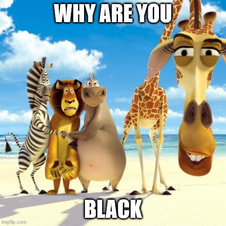
Everytime I see it I laugh. Everytime I think about it I laugh. I cannot speak as to why anybody else might find it funny, but to me, the comedy not only stems from the absurdity of the question's nature, but in its truth.
by Scott MacLean
I’m glad I can watch a show like Schitts Creek or read a book like The Gravity of Us by Phil Stamper, examples of quality LGBTQ stories that aren’t entirely centered on the fact that the characters are gay, but unfortunately, kids aren’t dressing up as Kurt Hummel from Glee on Halloween. They’re dressing up as Harry Potter, Daenerys Targaryen, or Harley Quinn, heroes from epic stories full of adventure.
by Christopher M. Comparri
|
Categories
All
Archives
September 2026
|


 RSS Feed

|
Glassworks is a publication of Rowan University's Master of Arts in Writing 260 Victoria Street • Glassboro, New Jersey 08028 [email protected] |
All Content on this Site (c) 2026 Glassworks
|
