
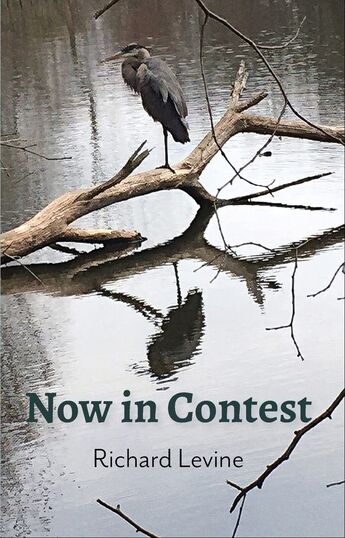
Human beings are born to connect emotionally with one another, hardwired to feel a range of emotions which are dependent on our situation and surrounding environment. In his collection of poems, Now in Contest, Richard Levine explores what it means to be human when life seems to throw so much negativity into the world. How do we carry on when it feels like we’re drowning? Levine shows the heartbreaking nature of what mankind is capable of, but also the beauty in the little things that we as a society collectively enjoy; the shared emotional connection that we have not only with each other, but the world around us. Through emotional imagery, metaphor, and symbolism Levine is able to take the reader on a journey of self-reflection, as he juxtaposes the spectrum of human emotion.
3 Comments
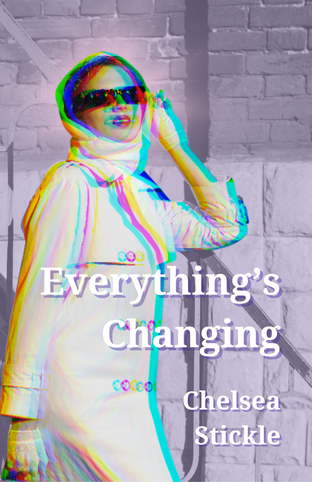
“Change is the only constant,” Chelsea Stickle writes in “Worship What Keeps You Alive”, the first flash fiction piece of her chapbook. This quote perfectly encapsulates Everything’s Changing, where nothing’s as it seems. The world has changed and the possibilities are endless in Stickle’s book, but one thing is as prevalent in this book as it is in society, and that’s the struggles of women and girls. Stickle uses absurdities throughout the book to tell stories, depicting women attempting to navigate a world that doesn’t like nor respect them. The problems women face are often overlooked, but Stickle reimagines these problems and tells them in a way that’ll have readers begging for more.
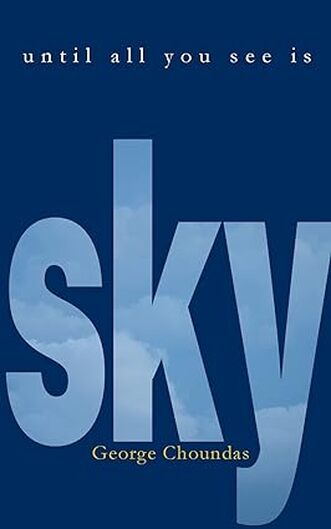
“We may know the sacred; we may not impart it.”
George Choundas tosses this penetrating sentence seventy-five pages into his collection of essays, Until All You See is Sky. It’s one of the many turns of phrase that will make the reader pause and reflect. This in itself is not so shocking—good writing should, at the bare minimum, have an impact on the reader. What sets Choundas apart from the others, in my opinion, is context. Where this shrewd pronouncement is more befitting a spiritual revelation or a hard-learned life lesson, Choundas has gifted this deep and affecting statement to… baked goods.
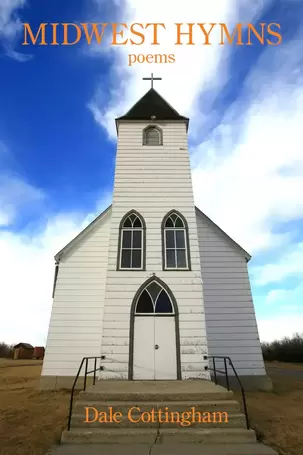
Dale Cottingham’s collection, Midwest Hymns, reads as a meditation on a man’s journey through life’s myriad challenges, and healing through becoming one with nature and its cycles. Cottingham’s muse is the family and land that raised him, and each of these poems act as a patchwork in making an overall warm and nostalgic reading experience.
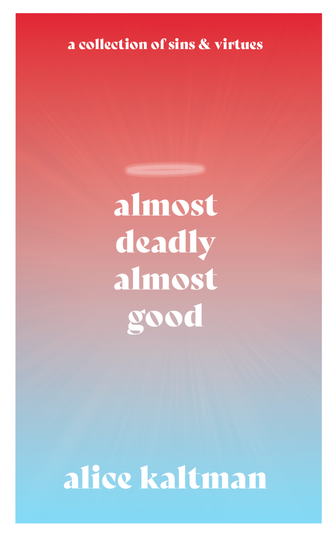
Most of us are familiar with the concept of the seven deadly sins: gluttony, envy, wrath, lust, sloth, to name a few. Alice Kaltman embraces these sins—along with their virtuous counterparts—in her short story collection, Almost Deadly, Almost Good. She personifies the sins in her complex characters while exploring an equal number of virtues. Her stories depict the tragedies and triumphs of human nature. Characters embodying gluttony, envy, and wrath seem to be in a constant state of inner conflict and turmoil while those who practice kindness, humility, and patience have better outcomes.
|
Archives
April 2024
Categories
All
|
 RSS Feed
|
Glassworks is a publication of Rowan University's Master of Arts in Writing 260 Victoria Street • Glassboro, New Jersey 08028 glassworksmagazine@rowan.edu |
All Content on this Site (c) 2024 Glassworks
|