
Yuvi Zalkow’s second and newest novel, I Only Cry With Emoticons, is a hilarious ride through dealing with human connection in a modern age littered with smartphones, tablets, dating apps, and hashtags. At its core, it’s a story about responsibility. It begs the question, how do we take responsibility for our irresponsible reliance on technology? How do we take responsibility for allowing ourselves to become so disconnected not just with one another, but our own lives?
0 Comments
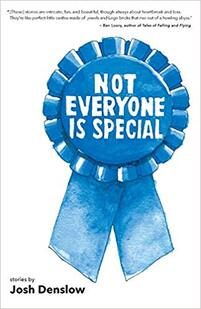
Each of us finds a way to cope with the hurdles and pain that life throws our way. Some turn towards their work, others to more destructive means. Then, there’s Josh Denslow. In his collection of stories Not Everyone is Special, Denslow covers a range of topics with his characters: from being a child of divorce, to being a survivor in the aftermath of a friends’ suicide, to being a little person in today’s world. His approach is to use humor not only to build up the narrative in each story, but show how people use it as a form of self-preservation and self-defense in ways that are true to real life, even when he is putting a character in a world where people have superpowers like being able to get the wrinkles out of shirts by patting them down with their hands or extending and retracting their facial hair in real time.
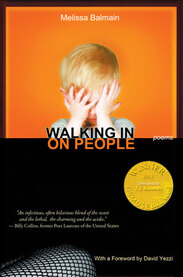
Melissa Balmain’s book Walking in on People transfixes readers with the humor of her and her family’s everyday life. The poet's simple language illustrates a play on observation, thought, and vantage point as she tackles marriage, raising children, and pop culture. Delivering lines that are thought provoking and eloquent, she simultaneously keeps the poetry genuine with her direct language. Balmain is boldly “walking in on people” where many choose not to go. This collection shouldn’t, however, be seen as spying, but rather as a different take on the renewal of faith in everyday human nature. The poems in Balmain’s collection have varied subject matter and are intended to be humorous. Readers of more than one personality type should be able to at least smile after entering this poet's world. Because some of the entries are so short, every word has to mean something…and each one does. Walking in on People is constructed in such a way that the poems flow easily from one to the next. It also helps that they are divided into sections so the reader can skip around to the subjects they find more interesting. |
Archives
July 2024
Categories
All
|

 RSS Feed

|
Glassworks is a publication of Rowan University's Master of Arts in Writing 260 Victoria Street • Glassboro, New Jersey 08028 [email protected] |
All Content on this Site (c) 2024 Glassworks
|