
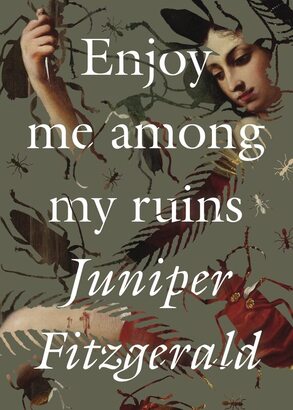
As with any book review, I know I have an obligation to remain professional in the following paragraphs. But Juniper Fitzgerald forces me to be personal in every letter that bleeds through the choreographed motion of my fingertips on this keyboard. I almost want to conduct this as an open letter to Juniper, a “thank you” note that wouldn’t be nearly as impactful as I hope it could be. But that wouldn’t be fair to Fitzgerald or her story, or to the stories of Jean, and Cassandra, and her Grandma, and Theresa, and Diana, and Marita, and Anita, and Dakota, and Andi, and Jennifer.
Trigger Warnings: Sexual abuse/assault, sexism, sexual violence, consensual yet gore sexual descriptions.
0 Comments
Against the backdrop of a slowly dying world, Helene Bukowski writes a beautiful and brutal story about living with trauma, the strain of motherhood, and the danger of fearing the unknown.
In the opening lines of Milk Teeth, Helene Bukowski sets the tone for the story to come: “The fog has swallowed up the sea. It stands like a wall, there, where the beach begins. I can’t get used to the sight of the water. I’m always looking for a bank on the opposite side that could reassure me, but there’s nothing but sea and sky. These days, even this line is blurred.” Beautiful, brutal, and eerily accessible, the story of Milk Teeth is one that peels back the layers we build around fear; it lays them bare along tainted waters and dares its readers to move through the fear and into the beyond.
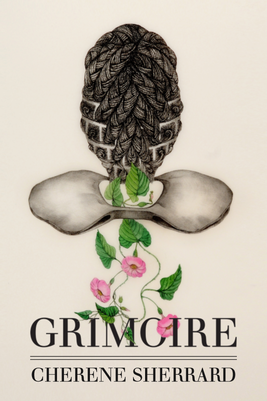
On her dedication page, Cherene Sherrard indicates her poetry collection, Grimoire, is “[f]or the mothers.” I am left with the following question: what makes a mother a “mother?” Is it the nine months of carrying a child in the womb, giving birth, and then raising said child? Or is it simply the act of loving a child, despite not ever meeting them due to gestation or birth complications?
I ask this question because many of the speakers in Grimoire are childless, either due to miscarriages, complications, or stillbirths. Are they included in Sherrard’s dedication to “mothers”? Can they even be considered mothers without living children? These mothers in Grimoire, who have lost their babies, are Black mothers in America, and for many, they have lost their babies due to factors out of their control such as miscarriages and institutionalized racism. |
Archives
July 2024
Categories
All
|

 RSS Feed

|
Glassworks is a publication of Rowan University's Master of Arts in Writing 260 Victoria Street • Glassboro, New Jersey 08028 [email protected] |
All Content on this Site (c) 2024 Glassworks
|