
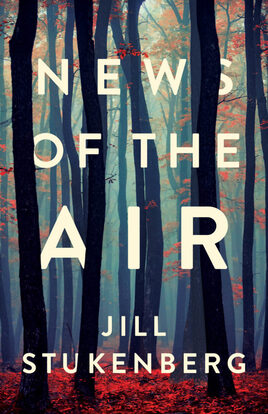
It’s not every day that people run to the Northwoods, particularly in the Wisconsin region, for safety and stability. Yet it proves itself to be the perfect backdrop for Jill Stukenberg’s News of the Air. In this novel, Stukenberg paints the picture of a near future with repeated violent protests flooding the cities and wildfires rampaging the rest. In what starts off with a similar feel to The Handmaid’s Tale, Stukenberg details the journey of a young family, especially the mother, sacrificing the pleasures of city life for a new, safer life in the woods where her daughter can stretch her legs and peace can envelop them all. However, as life goes on, the daunting realization creeps up that trouble is everywhere and that running away from your problems often creates new ones, maybe even ones that you can’t run from anymore.
0 Comments
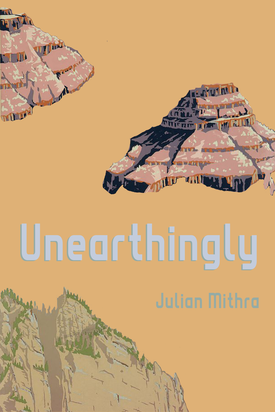
From page one, author Julian Mithra demonstrates a mastery over various literary formats: poems, short stories, newspaper and magazine articles, textbook excerpts, and more. Mithra uses each form a number of times, using and subverting conventions to draw the reader deeper into the fictional town of Goldened, Colorado. The result is a town, complete with people and history, that comes to life with each new page and imagined document, making you feel like you’re unearthing a lost shard of history. Giving voice to voiceless rocks, moles, and other dwellers of the dirt, Unearthingly had me digging deeper and deeper with each imaginary document.
Glass.
The word itself evokes fragility, as well as a certain sense of clarity. It’s easy to conjure the image of stained glass windows in a cathedral, or worn sea glass on the edge of a sprawling beach: both images clear, both images concrete. But what is really “clear” this day in age? Dobby Gibson’s fourth collection of poetry, entitled Little Glass Planet, asks this very question.
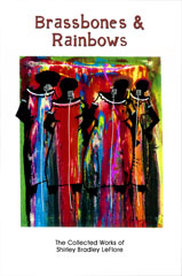
Shirley Bradley LeFlore’s debut poetry book, Brassbones and Rainbows, is a vivid collection that uses a musical voice to address political and social issues. LeFlore’s word choice throughout her poems evoke the feelings of gospel and blues, and when reading the poems you don’t hear the writer’s voice speaking to you; it shouts and sings with passion you can feel in every line.
Many of the poems in the collection are written in a voice that shouts from the page, making one picture the poet as one who is fighting against being silenced. While the words in the poems don’t specifically say who or what is trying to silence the poet, the undertone of racism and prejudice stands out as the ideology the poet is preaching against. The need to shout out loud and be heard is perhaps best expressed in the closing lines of her poem “Brass Reality,” which reads, “you can bury me in the east / you can bury me in the west / but I’m gonna rise-up and be a TRUMPET in the mawnin.” |
Archives
July 2024
Categories
All
|

 RSS Feed

|
Glassworks is a publication of Rowan University's Master of Arts in Writing 260 Victoria Street • Glassboro, New Jersey 08028 [email protected] |
All Content on this Site (c) 2024 Glassworks
|