

In Katya Apekina’s novel The Deeper the Water the Uglier the Fish, relationships are used to emphasize characterization and create drama within the story. In particular, the novel examines father-daughter relationships, mother-daughter relationships, husband-wife relationships, and artist-muse relationships. Told through numerous first person accounts in the form of narratives, letters, phone conversations, and interviews, Apekina provides the reader with an in depth, up-close look at the intimate intricacies of these relationships and their meanings. The unique structure of this novel allows the reader to see each character’s internal and external struggles and conflicts. These accounts in various forms help create strong characterization and drama within the story.
0 Comments
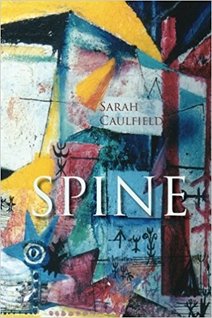
Sarah Caulfield's words dig beneath our flesh and go straight to the bone in her collection of poetry, SPINE (2017). Caulfield’s first book beautifully weaves together powerful images of blood and bone, plus themes of religion, chronic illness, and guilt, pulling on the reader's heartstrings and commanding empathy. The repeated themes make it clear that these topics are very important to Caulfield, and are ones often swept under the rug instead of spoken about in society.
Megan Martin’s Nevers throws you head first into the mind of a manic-depressive writer in a sinking relationship, rarely slowing to answer your questions. The unnamed narrator is every artist dissatisfied with life, raging against their peers, their lovers, their mothers, and most of all themselves. Martin’s prose delivers a punch to the gut followed by a gentle pat on the head. And then it punches you in the gut again, but while you’re still reeling, it does a handstand and you can only look on in bemused delight. Martin captures the feeling of cyclical depression with startling accuracy.
The self-described fictions, too short to be vignettes and too interwoven to be short stories, wind through the peaks of one woman’s odes of love, climbing the cliffs of her manic fever dreams only to drop down into dark valleys of self-loathing and rage. The first few pages are a confession, the narrator declaring to her lover “you are the most amazing creature ever to straddle this planet.” A few pages later, however, the narrator admits that she longs to romance other people, that she will “tell you I love you" and then immediately "worry about running out of eggs,” going through the ordinary motions of daily life despite being unhappy.
Johannes Göransson’s second novel, Haute Surveillance, first introduces his nameless narrator in the midst of confusion: he immerses his readers in a world of grotesque and vivid imagery, of “a thousand mute actresses with their mouths full of jewelry,” of a “cutting room” that is “full of soldiers masturbating.” He places readers in his piecework of violence, sex, art and emotion, in short snapshots of unexplained events, and leaves them scrambling to find their way out. Readers get one companion, one true character: an unreliable, determined, and probably insane narrator, and the reader slowly realizes this world is the narrator’s own.
Göransson makes it clear from the very first page that the reality of the situation isn’t important, what is happening isn’t even important. The ideas are. |
Categories
All
Archives
September 2026
|
|
Glassworks is a publication of Rowan University's Master of Arts in Writing 260 Victoria Street • Glassboro, New Jersey 08028 [email protected] |
All Content on this Site (c) 2026 Glassworks
|
RSS Feed