

|
In terms of gritty, disturbing realism, Grand Theft Auto has nothing on The Book of Aron. Told in the straightforward voice of a child who understands harshness and guilt from the earliest age, The Book of Aron gives an unflinching view of life in the Warsaw Ghetto as well as what it was like to be a child of deep poverty in the years before childhood was deemed a special and protected space. It is a tale of modernization and industrialization as well as a Holocaust tale.
Novelist Jim Shephard tells the true story of Janusz Korczak, a Jewish-Polish doctor and educator who is heroic both for his revolutionary ideas of treating children with respect and dignity as well as for the work he did running an orphanage in the Warsaw Ghetto, but he filters it through the eyes of one of the children he helped. When Shephard found Aron’s voice, a voice which has the cadence of a Yiddish curse, he found a way to tell a hero’s story while insisting the hero was quite fallible and quite human.
0 Comments
With the open information attitude and international connectivity brought on by the Internet age, women are challenging what it means to be wife, mother, and daughter, raising their voices to share their stories and capture the imaginations of young girls internationally. Few express this better than Mary Woster Haug, author of Daughters of the Grasslands: A Memoir.
She claims that tradition and honor are the chains that bind girls to the same limited resources that their mothers and grandmothers have struggled with. In order for girls to fight these concepts, they must often turn against their own mothers, or feel as though they are: Not a battle for the faint of heart. Raised on the grasslands of North Dakota, Haug is a modern woman born from tradition. A self-proclaimed feminist, she tells of her personal evolution away from the values that buoyed her own mother, and Haug’s effort to escape the judgement she read so plainly in her mother’s features. Haug runs all the way to South Korea, taking a year-long professorship at the University in Daejeon. What she discovers is that mother-daughter conflicts are universal. Instead of escape, South Korea is more a harsh emersion into the tensions Haug never wanted to face.
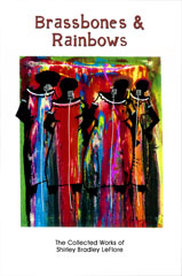
Shirley Bradley LeFlore’s debut poetry book, Brassbones and Rainbows, is a vivid collection that uses a musical voice to address political and social issues. LeFlore’s word choice throughout her poems evoke the feelings of gospel and blues, and when reading the poems you don’t hear the writer’s voice speaking to you; it shouts and sings with passion you can feel in every line.
Many of the poems in the collection are written in a voice that shouts from the page, making one picture the poet as one who is fighting against being silenced. While the words in the poems don’t specifically say who or what is trying to silence the poet, the undertone of racism and prejudice stands out as the ideology the poet is preaching against. The need to shout out loud and be heard is perhaps best expressed in the closing lines of her poem “Brass Reality,” which reads, “you can bury me in the east / you can bury me in the west / but I’m gonna rise-up and be a TRUMPET in the mawnin.” |
Categories
All
Archives
November 2025
|
|
Glassworks is a publication of Rowan University's Master of Arts in Writing 260 Victoria Street • Glassboro, New Jersey 08028 [email protected] |
All Content on this Site (c) 2025 Glassworks
|
RSS Feed