
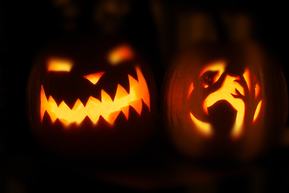
 Image provided by kylewagaman License CC BY-NC-SA 2.0 Source Flickr Image provided by kylewagaman License CC BY-NC-SA 2.0 Source Flickr by Elizabeth Mosolovich Halloween is a time for tricks and treats, when children--and some adults--run about in costume going door to door and asking for candy. Stories of monsters, ghosts, and witches become easier to believe as people decorate their houses with jack-o-lanterns, cobwebs, and gravestones. There are plenty of ways to get into the spirit of this holiday, including watching movies like Friday the 13th, or the more kid-friendly It’s the Great Pumpkin, Charlie Brown, as well as reading books like the old classic such as The Legend of Sleepy Hollow by Washington Irving or a new favorite like Scary Stories to Tell in the Dark by Alvin Schwartz. But Halloween is not for everybody. Though the holiday has become rather secularized, its origins are a mixture of pagan harvest festivals and the Roman Catholic feast days All Saints’ and Souls’ Days; therefore some Orthodox Jews and Muslims do not celebrate the holiday. Other Christian groups also refrain from partaking in Halloween festivities, as they dismiss the day because of its partially pagan beginnings and fear that celebrating Halloween equals celebrating witchcraft or Satanism. And those attitudes are fine--everyone is entitled to their opinion and to practice their religious beliefs freely. However, when these religious beliefs, especially fears about the occult and witchcraft, involve suppressing people’s access to literature, it becomes a problem. 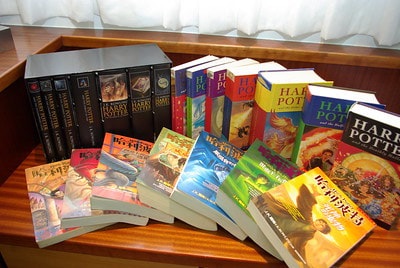 Image provided by Hung Chieh Tsai through Flickr Image provided by Hung Chieh Tsai through Flickr Book bannings are not a new thing, nor are they limited to the United States--there is a famous memorial to burned books in the square of Humboldt University of Berlin, Germany to remind people of the Nazis’ censorship. There are plenty of reasons why books might be banned in some schools or states, like for religious reasons; for instance, the Merriam-Webster's Dictionary & Thesaurus was banned in some California schools because it defined oral sex. But many books are banned because they, like Halloween, promote “demonic possession [and] mischief” or “interest little minds in the devil with all of his evil works.” One of the most infamous fights to ban books due to their inclusion of witchcraft is centered on the world-renowned Harry Potter series by J.K. Rowling. Harry Potter made the top 100 most frequently challenged books of the decade 1990-1999, and topped the list of 2000-2009. But even beloved classics like Bridge to Terabithia and Where the Wild Things Are are prohibited in schools and libraries--which are meant to be bastions of learning and new ideas--because they supposedly encourage Satanism and an interest in the supernatural. Such bans do not protect children. First, they’re insulting, as they imply that children can’t distinguish between reality and fantasy, or that they are as easily frightened by dark images as a proper Victorian lady is frightened by mice. And, yes, Harry Potter’s popularity has led to people imitating some of the books’ fantastical elements, such as Quidditch, but none of the participating teams expect their broomsticks to suddenly levitate. In fact, a whole host of alternate interpretations of Harry Potter have been published that describe it as a Christian story and consider the series the “best and most powerful contemporary retelling of the gospel narrative.” Similarly, other works accused of “selling” paganism and occultism, such as The Lord of the Rings or The Chronicles of Narnia contain great amounts of Christian symbolism and were written by devout Christians.
Books are opportunities waiting to be experienced and shared. They are gateways to invaluable skills and knowledge, especially for children. Not only do books help children learn to read, think, and analyze, but also how to empathize and connect with other human beings. Children’s reading options should not be limited, but rather expanded, especially if a child dislikes reading or cannot find a subject they want to read. Parents know their children best, and if a parent has legitimate concerns over their child’s reading material, then they should discuss it with their child and their teachers first rather than try and ban the book from schools and libraries entirely. In fact, a controlled environment like the classroom can be a better place for students to read challenging books without being unduly influenced by them.
Widespread access to literature is a vital piece of children’s education. Books allow children to experience the world and form meaningful connections with others and teach them how to think for themselves--something that would benefit adults as well, no matter their religious beliefs. Literature--especially children’s literature--should not be banned but rather celebrated, every day of the year.
0 Comments
Leave a Reply. |
Archives
July 2024
Categories
All
|
 RSS Feed
|
Glassworks is a publication of Rowan University's Master of Arts in Writing 260 Victoria Street • Glassboro, New Jersey 08028 [email protected] |
All Content on this Site (c) 2024 Glassworks
|