
|
by Courtney R. Hall
0 Comments
by Gianna Forgen 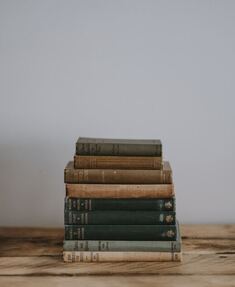 Photo by Annie Spratt on Unsplash Photo by Annie Spratt on Unsplash When I was in elementary school, I read all the time. I vividly remember, during a snack break, I had become so entranced by my book that I had missed my teacher calling my table for our turn to use the bathroom. I remember, too, the look on her face, probably wondering if it was worse that I hadn’t listened, or worse to chastise me for reading.
Back then, it felt like everyone loved to read. When we filled out posters at the beginning of the school year detailing our hobbies, two took precedence above all others: reading and writing. As students, we had to read, of course, but it seemed like everyone still enjoyed it, at least the kids in my class. In elementary school, a boy I was friends with and I read the entire Harry Potter series at the same time–he finished Deathly Hallows only fifteen minutes before me. He was one of the most voracious readers I knew. by Qwayonna Josephs
Looking back now, it’s crazy to think that my introduction to Black-led stories was a book with a Black man on the cover, holding a gun, a book that was distributed to schools from Scholastic and praised as honest portrayals of inner city kids. Yet, every one of those books I read came from the mind of Paul Langan, a white man who claims in an interview that his intention behind the idea was sparked by minority students wanting to see themselves in print. I’m sure that drew lots of students to the books, seeing someone who looked like them on the cover―it definitely drew me in―but, with maturity and clarity, I now understand the harmfulness of these stories and characters. While trying to show our “experiences,” the books highlight negative stereotypes, slap on a problematic cover, and end up in the hands of impressionable elementary, middle, and high school kids that are desperate to see themselves in a story.
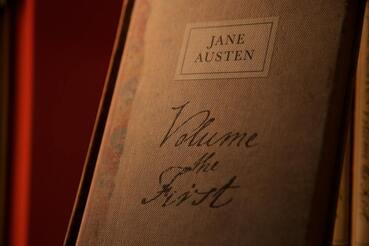 Photo by Paolo Chiabrando on Unsplash Photo by Paolo Chiabrando on Unsplash by Nyds L. Rivera
My first introduction to Jane Austen was when I was twelve years old, on the brink of coming out to my family, caught in the throes of questioning my sexuality. Pride and Prejudice was the first romance novel I ever read where I actually found some level of identity in it. Now, nearly a decade later, and still as enamored with Austen’s work as I was in middle school, I’ve discovered that this is far from a unique experience. Much of my close circle of friends is comprised of queer people, and most, if not all, of them are also fellow Austenites (Janeites? I’ve heard both). So why is this?  by Ariana Tucker
Go onto any major book-selling website and you’ll probably find a section dedicated to Black authors in the list of genres and subcategories. Amazon calls theirs “Amplify Black Voices” and lists it among other popular keywords like “Award Winners” and “Celebrity Picks.” Barnes and Noble calls theirs “Black Voices” and lists it among other browsing options such as “Large Print Books” and “Trend Shop.” Click on either link and you’ll see popular books written by Black authors, most of which are the same books we’ve been talking about for the last five years. Barnes and Noble is the worst offender of this. On their featured page of “Fiction: Black Voices,” only four were published between 2020 and 2021 (Colson Whitehead’s Harlem Shuffle is their featured book from 2021). The rest are classics by Nella Larsen, Zora Neale Hurston, and Ralph Ellison and books by authors like Chimamanda Ngozi Adichie and Sister Souljah, which were published in the 2000s and 2010s. Amazon at least offers a more up-to-date list of recently released books by month and recommendations from editors and Black icons like Billy Porter and Rick Ross. You can find almost any genre and any subject here, the only difference is that the authors are all BIPOC. |
Archives
July 2024
Categories
All
|

 RSS Feed

|
Glassworks is a publication of Rowan University's Master of Arts in Writing 260 Victoria Street • Glassboro, New Jersey 08028 [email protected] |
All Content on this Site (c) 2024 Glassworks
|