
|
by Connor Buckmaster  Photo by Joseph Chan on Unsplash Photo by Joseph Chan on Unsplash For decades now, the study and practice of writing has been on a revolutionary roller coaster. Leaps in pedagogy surrounding college composition classes, translanguaging, and collaborative learning have changed the way college students today learn and produce writing. At the same time, the (dated) values of Standard American English, the five paragraph essay, and the thesis statement are still upheld in many pockets of American public schools. We wonder why Americans struggle to write, and there seems to be a host of answers: an inability to construct sentences, a fundamentally bad approach in teaching how to read, and a school culture which rewards surface learning and quick responses, viewing texts as inert information rather than an argument. The more and more we look, America seems to be in a literacy crisis.
0 Comments
by Mick Bratton 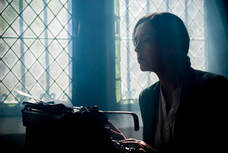 Writers have a tendency to conjure up the familiar term “writer’s block” as an excuse for not being able to produce content. The spewing of this writerly phenomenon, infamously treated as a common illness, is simply an excuse to not write at all—and it’s probably subconscious. We base our day-to-day lives around the world in which we experience life with our senses—our truths—and so it can be very believable that a blockage has been formed when there’s just a lack of motivation and inspiration. We need any liable subject to blame rather than owning up to our own actions. To blatantly dissect this disillusioned label and pluck it out of the book of excuses: writer’s block is a choice that has made its imprint on the world and has been alive and breathing for far longer than it should have.
by Mark Krupinski  “Anything and everything can be art!” is, I feel, a deceptively sinister phrase. You could substitute the rather generic “art” in this situation with your medium of choice, be it poetry, film, literature, or what have you, and the situation remains unchanged. It seems innocuous at first, even encouraging. Anything can be art; no matter how lost you may feel, no matter what vision you lack, your expression has merit. You exist and you are valid. As someone who has spent more time than perhaps he’d like to admit pacing fretfully to and fro, hyperventilating into a McDonald’s bag because the words don’t sound the way they’re supposed to, I understand. Writing is a painful, clumsy, often fruitless task, so positive affirmation is as valuable as it is rare. But there’s a danger in creating that sense of comfort, tossing standards by the wayside in favor of blind positivity and confidence. The idea that everything, every single careless, thoughtless, witless, messy, wishy-washy, meandering, pointless thing is art gives me pause.
CLICK TO VIEW INFOGRAPHIC |
Archives
July 2024
Categories
All
|
 RSS Feed

|
Glassworks is a publication of Rowan University's Master of Arts in Writing 260 Victoria Street • Glassboro, New Jersey 08028 [email protected] |
All Content on this Site (c) 2024 Glassworks
|