
|
by Emily Langford  Photo by Sincerely Media on Unsplash Photo by Sincerely Media on Unsplash As a queer, “elder millennial” who watched as personal computers suddenly took root in our homes, I experienced the rise of online fandom firsthand. Prior to the internet, my experience with fandom was a solo one, I didn’t know anyone who had the same obsessive passion for stories and characters like I had. I was the annoying kid who would, unprompted, spew out tidbits and theories about books and movies, the weirdo who was off in her own little world where all her characters existed at my day-dreamy little whims. I was tolerated at best and I eventually learned to keep my fervor to myself. I remember the first time I entered the titles of my favorite obsessions into the search bar. Suddenly, I was very much not alone. Each of my hyperfixations had a dedicated chat room or message board with other people who understood, who shared my passions. I finally found a place of acceptance.
1 Comment
by Qwayonna Josephs
Looking back now, it’s crazy to think that my introduction to Black-led stories was a book with a Black man on the cover, holding a gun, a book that was distributed to schools from Scholastic and praised as honest portrayals of inner city kids. Yet, every one of those books I read came from the mind of Paul Langan, a white man who claims in an interview that his intention behind the idea was sparked by minority students wanting to see themselves in print. I’m sure that drew lots of students to the books, seeing someone who looked like them on the cover―it definitely drew me in―but, with maturity and clarity, I now understand the harmfulness of these stories and characters. While trying to show our “experiences,” the books highlight negative stereotypes, slap on a problematic cover, and end up in the hands of impressionable elementary, middle, and high school kids that are desperate to see themselves in a story.
by Dominick Marconi 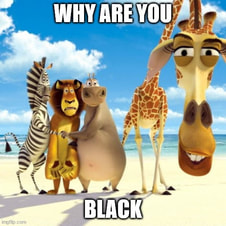 There was this popular meme that recirculated in 2020 which featured a still frame from the Dreamworks animated film Madagascar. It showed the four main characters, Alex the Lion, Gloria the Hippo, Marty the Zebra, and Melman the Giraffe with puzzled expressions on their faces and overlaid text that read, simply: “Why are you black?”
Everytime I see it I laugh. Everytime I think about it I laugh. I cannot speak as to why anybody else might find it funny, but to me, the comedy not only stems from the absurdity of the question's nature, but in its truth. by Scott MacLean  via Unsplash via Unsplash Can you name one gay superhero? I can’t. How about a wizard? Warrior? Villain? The sad fact of the matter is that I’ve read over two hundred young adult fantasy books and I know of only one that has a main character that’s gay. Now I know what you’ll say, media and literature is much more inclusive these days, which is true. According to a 2019 report done by GLAAD, the percentages of LGBTQ representation are at an all time high, and I’ll be the first to admit that it’s nice to have more options, especially in literature, but why hasn’t this translated to fantasy and other genres?
I’m glad I can watch a show like Schitts Creek or read a book like The Gravity of Us by Phil Stamper, examples of quality LGBTQ stories that aren’t entirely centered on the fact that the characters are gay, but unfortunately, kids aren’t dressing up as Kurt Hummel from Glee on Halloween. They’re dressing up as Harry Potter, Daenerys Targaryen, or Harley Quinn, heroes from epic stories full of adventure. 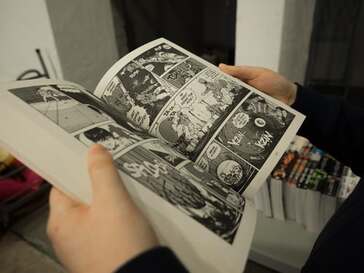 by Christopher M. Comparri
The appeal of books, movies, television and any sort of story-telling platform can be boiled down to two key components: having a great story and having great characters to fill out said story. As viewers and readers, we often find ourselves rooting for certain characters and despising others to the pits of our very soul. This can be for any number of reasons: rooting for the underdog, finding a character that is relatable, finding one that embodies the essence of what we feel is right or wrong with the world. Finding the handful of characters that you feel strongly about builds an emotional tie between the content produced and the individual consuming it. However, the trend of incorporating huge casts of characters into stories is now having an adverse effect. People are finding too many characters to like or hate in passing. These characters are being masked as huge markers in a story, but the reality is quite different. In literature, sometimes less is more. |
Archives
July 2024
Categories
All
|
 RSS Feed
|
Glassworks is a publication of Rowan University's Master of Arts in Writing 260 Victoria Street • Glassboro, New Jersey 08028 [email protected] |
All Content on this Site (c) 2024 Glassworks
|